


Welcome to Walker’s Wad Wizard Choke Tube System
For exclusive offers, like & follow us on Social Media:
Wad Wizard and Terror Choke Tubes
3 Reasons To Buy A Patented Wad Wizard Choke Tube
Available in 10, 12 & 20 Gauge
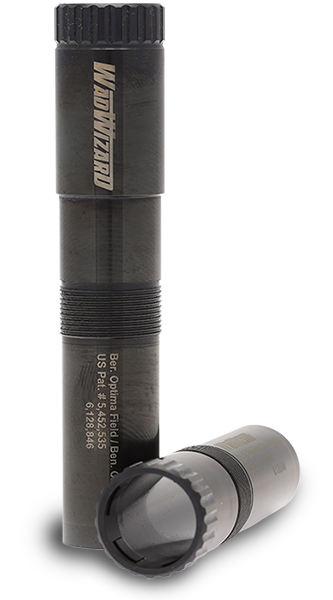 VERSATILITY – These choke tubes are a real bargain! Any individual Wad Wizard tube can be used with ANY size of shot, ANY type of shot and ANY length of shell. Performance can be varied by the length of shot shell, size of ammo, type of ammo and velocity of shell, just to name a few. Can be used for ALL hunting, sporting clays shooting, law enforcement and personal defense. Whether you’re a turkey hunter, clay bird shooter, waterfowl hunter, shooting upland game, or using buckshot for deer hunting or personal defense, the Wad Wizard Choke Tube is for you!
RELIABILITY – These choke tubes are manufactured with only the very best available firearms-grade steel, by experienced engineers and craftsmen who have a strong commitment to workmanship and quality control. All tubes are machined and threaded to proper specs, to virtually eliminate “tube back-out”.
PERFORMANCE – Unequaled “slap-down” performance with any velocity, size and type of shot, including steel, lead, bismuth, Hevishot™, tungsten-matrix, tungsten-iron, tungsten-polymer, and ALL sizes of buckshot. Performance without resorting to porting!
Wad Wizard Choke Tubes are available for these gun makes:
Beretta/Benelli 12 Ga. (Mobil, Nova, Super Nova, SBE, M1, M4, Franchi)
Optima Field 12 Ga. (Xtrema I & II, SBE II, SBEIII, M2, Vinci)
Optima HP 12 Ga. (Beretta A350 Extrema, A400 Xplor, SV10, Xtrema Plus)
Browning Invector Plus 12 Ga. (Winchester Super X2, X3, X4, SXP)
Browning Invector DS 12 Ga. (New A5)
Remington 12 Ga. (standard Remchoke)
Remington Pro Bore 12 Ga. (Versa Max)
Winchoke 12 Ga.(Winchester, Browning Invector, Mossberg 535)
Mossberg 12 Ga.(Mossberg 835 and 935)
TruChoke 12 GA.(Baikal MP153. Remington Spartan)
Beretta/Benelli 20 Ga. (Mobil choke style)
Optima Crio/Plus 20 Ga. (Xtrema I & II, SBE II, SBEIII, M2, Vinci)
Browning Invector Plus 20 Ga. (Winchester Super X2, X3, X4, SXP)
Remington 20 Ga. (Remchoke)
Browning 10 Ga. (Invector)
Remington 10 Ga. (Remchoke, SP-10)
Wad Wizard Choke Tube Models Available:
WAD WIZARD SUPREME 12 Gauge, STUD-10 10 Gauge & Power20 20 Gauge designed for Medium to Long-Range Shooting. WAD WIZARD SWAT designed for Short to Medium-Range Shooting.
Terror Choke Tube Models Available:
These are the highest quality constriction chokes available on the market today. We offer the Terror 10 ga. in both a .720″ and a .705″ diameter that allow you to reach out for those longer shots as well as a Terror 12 ga offered in a .675″ diameter.
Wad Wizard® Choke Tubes Do Not Work Like Funnels – Until recently, everyone thought that shotgun chokes “work” by funneling down metal shot pellets from a bore-size wad into a smaller stream under pressure, like a garden hose does with water. It was not really understood why the spread of pellets from a shotshell could be concentrated at a distance onto a target. Of course, the more shot that can be made to hit the target instantly, the greater the killing power.
It is true that pattern targets don’t lie. Funnel chokes seem to do a pretty good job on them. But they don’t tell you the whole truth, either. Click Here for More Info

Turkey hunters need to serve up a dense shot pattern that will deliver reliable “slap-down” killing power to tough old toms with the first shot. The patented Walker’s Wad Wizard wad-retarding system serves up reliable, consistent short shot string patterns that you can depend on to hit hard and put poultry in the pot.
https://wadwizard.com/turkey-hunters/


To show our love and appreciation for our amazing, long-term Facebook family, we’re doing a special raffle just for YOU!
We’d love for you to come follow us on Instagram too and help us grow our community there 🦆
How to enter:
1️⃣ Follow us on Instagram 👉 @wadwizard
2️⃣ Like this post
3️⃣ Share this post (to your page or story)
4️⃣ Tag 3 friends in the comments
🎯 One winner will receive a FREE choke of your choice!

The 12% Off Holiday Sale has been extended. Sale offer ends on 12/31/25.


10% Off Sitewide. Limited time offer. Shop online at wadwizard.com


Wad Wizard STUD 10 Pattern with Federal Steel # 2s, 1 3/8 oz. @ 40 Yards. 89 % in 30″ Circle

Walker`s Wad Wizard wad-retarding choke tubes deliver unprecedented tight patterns when it counts the most.

“I’ve chased a lot of turkeys down during their final death kick, but with this Wad Wizard, this joker was DRT!!! Best choke out there for turkey and waterfowl!!!!!!”

Walker’s Wad Wizard wad-retarding choke tubes are very effective for hunting upland game birds, rabbits and squirrels. Check out our patterns page to see the results!

It is true that pattern targets don`t lie. Funnel chokes seem to do a pretty good job on them. But they don`t tell you the whole truth, either. Check out our patterns page for the results at https://wadwizard.com/patterns/

Welcome to Walker’s Wad Wizard Choke Tube System
Wad Wizard and Terror Choke Tubes
For exclusive offers, like & follow us on Social Media:
3 Reasons To Buy A Patented Wad Wizard Choke Tube
Available in 10, 12 & 20 Gauge
 VERSATILITY – These choke tubes are a real bargain! Any individual Wad Wizard tube can be used with ANY size of shot, ANY type of shot and ANY length of shell. Performance can be varied by the length of shot shell, size of ammo, type of ammo and velocity of shell, just to name a few. Can be used for ALL hunting, sporting clays shooting, law enforcement and personal defense. Whether you’re a turkey hunter, clay bird shooter, waterfowl hunter, shooting upland game, or using buckshot for deer hunting or personal defense, the Wad Wizard Choke Tube is for you!
RELIABILITY – These choke tubes are manufactured with only the very best available firearms-grade steel, by experienced engineers and craftsmen who have a strong commitment to workmanship and quality control. All tubes are machined and threaded to proper specs, to virtually eliminate “tube back-out”.
PERFORMANCE – Unequaled “slap-down” performance with any velocity, size and type of shot, including steel, lead, bismuth, Hevishot™, tungsten-matrix, tungsten-iron, tungsten-polymer, and ALL sizes of buckshot. Performance without resorting to porting!
Wad Wizard Choke Tubes are available for these gun makes:
Beretta/Benelli 12 Ga. (Mobil, Nova, Super Nova, SBE, M1, M4, Franchi)
Optima Field 12 Ga. (Xtrema I & II, SBE II, SBEIII, M2, Vinci)
Optima HP 12 Ga. (Beretta A350 Extrema, A400 Xplor, SV10, Xtrema Plus)
Browning Invector Plus 12 Ga. (Winchester Super X2, X3, X4, SXP)
Browning Invector DS 12 Ga. (New A5)
Remington 12 Ga. (standard Remchoke)
Remington Pro Bore 12 Ga. (Versa Max)
Winchoke 12 Ga.(Winchester, Browning Invector, Mossberg 535)
Mossberg 12 Ga.(Mossberg 835 and 935)
TruChoke 12 GA.(Baikal MP153. Remington Spartan)
Beretta/Benelli 20 Ga. (Mobil choke style)
Optima Crio/Plus 20 Ga. (Xtrema I & II, SBE II, SBEIII, M2, Vinci)
Browning Invector Plus 20 Ga. (Winchester Super X2, X3, X4, SXP)
Remington 20 Ga. (Remchoke)
Browning 10 Ga. (Invector)
Remington 10 Ga. (Remchoke, SP-10)
Wad Wizard Choke Tube Models Available:
WAD WIZARD SUPREME 12 Gauge, STUD-10 10 Gauge & Power20 20 Gauge designed for Medium to Long-Range Shooting. WAD WIZARD SWAT designed for Short to Medium-Range Shooting.
Terror Choke Tube Models Available:
These are the highest quality constriction chokes available on the market today. We offer the Terror 10 ga. in both a .720″ and a .705″ diameter that allow you to reach out for those longer shots as well as a Terror 12 ga offered in a .675″ diameter.
Wad Wizard® Choke Tubes Do Not Work Like Funnels – Until recently, everyone thought that shotgun chokes “work” by funneling down metal shot pellets from a bore-size wad into a smaller stream under pressure, like a garden hose does with water. It was not really understood why the spread of pellets from a shotshell could be concentrated at a distance onto a target. Of course, the more shot that can be made to hit the target instantly, the greater the killing power.
It is true that pattern targets don’t lie. Funnel chokes seem to do a pretty good job on them. But they don’t tell you the whole truth, either. Click Here for More Info
Turkey hunters need to serve up a dense shot pattern that will deliver reliable “slap-down” killing power to tough old toms with the first shot. The patented Walker’s Wad Wizard wad-retarding system serves up reliable, consistent short shot string patterns that you can depend on to hit hard and put poultry in the pot.
https://wadwizard.com/turkey-hunters/
To show our love and appreciation for our amazing, long-term Facebook family, we’re doing a special raffle just for YOU!
We’d love for you to come follow us on Instagram too and help us grow our community there 🦆
How to enter:
1️⃣ Follow us on Instagram 👉 @wadwizard
2️⃣ Like this post
3️⃣ Share this post (to your page or story)
4️⃣ Tag 3 friends in the comments
🎯 One winner will receive a FREE choke of your choice!
The 12% Off Holiday Sale has been extended. Sale offer ends on 12/31/25.
10% Off Sitewide. Limited time offer. Shop online at wadwizard.com
Wad Wizard STUD 10 Pattern with Federal Steel # 2s, 1 3/8 oz. @ 40 Yards. 89 % in 30″ Circle
Walker`s Wad Wizard wad-retarding choke tubes deliver unprecedented tight patterns when it counts the most.
“I’ve chased a lot of turkeys down during their final death kick, but with this Wad Wizard, this joker was DRT!!! Best choke out there for turkey and waterfowl!!!!!!”
Walker’s Wad Wizard wad-retarding choke tubes are very effective for hunting upland game birds, rabbits and squirrels. Check out our patterns page to see the results!
It is true that pattern targets don`t lie. Funnel chokes seem to do a pretty good job on them. But they don`t tell you the whole truth, either. Check out our patterns page for the results at https://wadwizard.com/patterns/